sports
80° Trending
REAL MADRID ON THE BRINK: Can The Kings of Europe Overcome Bayern Munich After Shocking First Leg Defeat?
📅 2026-04-08
⏱️ 5 min read
ID: 4
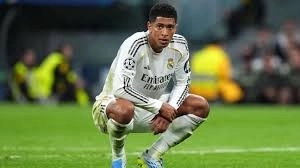
The legendary Santiago Bernabeu Stadium, a venue that has witnessed some of the most miraculous comebacks in football history, fell silent on Tuesday night as Real Madrid suffered a stunning 2-1 defeat at the hands of Bayern Munich in the first leg of their Champions League quarterfinal clash. The loss has left the Spanish giants facing an uphill battle to keep their European dreams alive, raising serious questions about whether the magic that has defined this club for generations is finally running out.
Real Madrid, a team synonymous with Champions League glory and improbable victories, found themselves outplayed for large portions of the match by a Bayern Munich side that arrived in the Spanish capital with clear intentions and executed their game plan to perfection. The German champions were superior in virtually every aspect of the game during the first hour, controlling possession, creating chances, and exposing defensive vulnerabilities that have plagued Madrid throughout the season.
The match began with Bayern asserting their dominance early, pressing high up the pitch and forcing Madrid into uncharacteristic errors. Luis Diaz opened the scoring for the visitors with a well-taken goal that silenced the home crowd and set the tone for what would become a difficult evening for the hosts. Harry Kane, the prolific English striker, doubled Bayern's advantage in the second half, capitalizing on defensive lapses to put the German side firmly in control of the tie.
For the first 60 minutes, Real Madrid looked anything but the team that has dominated European football for the past decade. The midfield, usually the engine room of Madrid's success, struggled to gain a foothold in the game, while the attack, led by the dynamic duo of Vinicius Junior and Kylian Mbappe, found themselves isolated and frustrated by Bayern's organized defensive structure.
However, as the second half progressed, the tide began to turn. Madrid, perhaps inspired by the weight of history and the expectations of their supporters, started to find their rhythm. Mbappe's goal in the 74th minute, a clinical finish from an excellent Trent Alexander-Arnold cross, breathed new life into the home side and set up a tense finale that had fans on the edge of their seats.
The final 15 minutes saw Madrid throw everything at Bayern in search of an equalizer, but the German side's goalkeeper, Manuel Neuer, produced a masterclass in goalkeeping with nine crucial saves that ultimately preserved his team's advantage. The veteran German international demonstrated why he is considered one of the greatest goalkeepers of his generation, frustrating Madrid's attackers time and again with acrobatic stops and commanding presence in the penalty area.
Despite the defeat, Real Madrid coach Alvaro Arbeloa remained defiant in his post-match comments, repeatedly emphasizing that "we are alive" and that the tie remains wide open. The one-goal margin means that Madrid still has everything to play for in next week's second leg in Munich, and history suggests that writing off this team would be a mistake.
Statistical analysis of the match reveals a surprisingly even contest in terms of chances created, with both teams registering 20 shots and creating a similar number of opportunities. However, Bayern's expected goals (xG) of 2.99 compared to Madrid's 1.97 tells a story of superior quality in the final third for the German side.
As Real Madrid prepares for the crucial second leg, questions remain about their ability to overcome the deficit. The away goals rule has been abolished, meaning a 1-0 victory in Munich would be enough to force extra time, while a win by two clear goals would see them through to the semifinals. The task is difficult but not impossible for a team that has made a habit of defying the odds in this competition.
The football world now waits to see whether Real Madrid can summon the spirit of their greatest European nights and produce another memorable comeback, or whether Bayern Munich's first-leg advantage will prove insurmountable. One thing is certain: the second leg in Munich promises to be a fascinating tactical battle between two of Europe's elite clubs.
Real Madrid, a team synonymous with Champions League glory and improbable victories, found themselves outplayed for large portions of the match by a Bayern Munich side that arrived in the Spanish capital with clear intentions and executed their game plan to perfection. The German champions were superior in virtually every aspect of the game during the first hour, controlling possession, creating chances, and exposing defensive vulnerabilities that have plagued Madrid throughout the season.
The match began with Bayern asserting their dominance early, pressing high up the pitch and forcing Madrid into uncharacteristic errors. Luis Diaz opened the scoring for the visitors with a well-taken goal that silenced the home crowd and set the tone for what would become a difficult evening for the hosts. Harry Kane, the prolific English striker, doubled Bayern's advantage in the second half, capitalizing on defensive lapses to put the German side firmly in control of the tie.
For the first 60 minutes, Real Madrid looked anything but the team that has dominated European football for the past decade. The midfield, usually the engine room of Madrid's success, struggled to gain a foothold in the game, while the attack, led by the dynamic duo of Vinicius Junior and Kylian Mbappe, found themselves isolated and frustrated by Bayern's organized defensive structure.
However, as the second half progressed, the tide began to turn. Madrid, perhaps inspired by the weight of history and the expectations of their supporters, started to find their rhythm. Mbappe's goal in the 74th minute, a clinical finish from an excellent Trent Alexander-Arnold cross, breathed new life into the home side and set up a tense finale that had fans on the edge of their seats.
The final 15 minutes saw Madrid throw everything at Bayern in search of an equalizer, but the German side's goalkeeper, Manuel Neuer, produced a masterclass in goalkeeping with nine crucial saves that ultimately preserved his team's advantage. The veteran German international demonstrated why he is considered one of the greatest goalkeepers of his generation, frustrating Madrid's attackers time and again with acrobatic stops and commanding presence in the penalty area.
Despite the defeat, Real Madrid coach Alvaro Arbeloa remained defiant in his post-match comments, repeatedly emphasizing that "we are alive" and that the tie remains wide open. The one-goal margin means that Madrid still has everything to play for in next week's second leg in Munich, and history suggests that writing off this team would be a mistake.
Statistical analysis of the match reveals a surprisingly even contest in terms of chances created, with both teams registering 20 shots and creating a similar number of opportunities. However, Bayern's expected goals (xG) of 2.99 compared to Madrid's 1.97 tells a story of superior quality in the final third for the German side.
As Real Madrid prepares for the crucial second leg, questions remain about their ability to overcome the deficit. The away goals rule has been abolished, meaning a 1-0 victory in Munich would be enough to force extra time, while a win by two clear goals would see them through to the semifinals. The task is difficult but not impossible for a team that has made a habit of defying the odds in this competition.
The football world now waits to see whether Real Madrid can summon the spirit of their greatest European nights and produce another memorable comeback, or whether Bayern Munich's first-leg advantage will prove insurmountable. One thing is certain: the second leg in Munich promises to be a fascinating tactical battle between two of Europe's elite clubs.