tech
80° Trending
FROM APOLLO TO ARTEMIS: MIT's Revolutionary Laser Terminal Launches On Historic Moon Mission - A New Era Begins!
📅 2026-04-08
⏱️ 5 min read
ID: 47
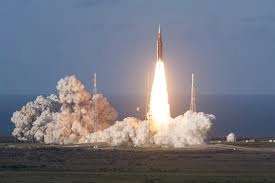
In a moment that bridges the past and future of space exploration, MIT Lincoln Laboratory's revolutionary laser communications terminal has launched aboard NASA's historic Artemis II moon mission, marking the beginning of a new era in how humans will communicate across the vast distances of space. The launch represents the culmination of decades of research and development, building on the legacy of Apollo while establishing the technological foundation for humanity's return to the moon and eventual journey to Mars.
The historical significance of this moment cannot be overstated. In 1969, Apollo 11 astronaut Neil Armstrong stepped onto the surface of the moon, delivering the iconic words that would echo through history: "That's one small step for man, one giant leap for mankind." That achievement was made possible by the technology of its time - radio communications that, while groundbreaking for the era, seem primitive by today's standards. Now, as NASA's Artemis II mission carries astronauts back toward the moon, a new generation of communications technology is ready to transform the human experience of space exploration.
The laser communications terminal developed by MIT Lincoln Laboratory represents a paradigm shift in space communications. Unlike traditional radio-based systems, which have been the standard since the earliest days of spaceflight, the laser system uses beams of light to transmit data at speeds that were previously unimaginable for deep space applications. The difference in capability is dramatic - where radio systems might transmit data at rates measured in kilobits or megabits per second, the laser system can achieve rates measured in gigabits per second, enabling the transmission of high-definition video, detailed scientific data, and real-time communications across interplanetary distances.
The development of this technology has required overcoming enormous technical challenges. Laser beams diverge much less than radio waves, meaning that the transmitting and receiving systems must maintain precise alignment across hundreds of thousands of miles. The spacecraft and Earth are both moving, and the laser must continuously adjust to maintain the connection. Atmospheric turbulence can distort the laser beam as it enters Earth's atmosphere, requiring adaptive optics and sophisticated signal processing to maintain data integrity. The system must operate in the harsh environment of space, where temperature extremes and radiation pose constant threats to sensitive electronic components.
MIT Lincoln Laboratory has been at the forefront of addressing these challenges for more than two decades. The laboratory's expertise in optical communications, precision engineering, and space systems has been essential to developing a terminal capable of meeting the demanding requirements of the Artemis mission. The successful launch of the system aboard Artemis II validates years of research and positions the laboratory as a leader in the emerging field of optical space communications.
The implications for future exploration are profound. As NASA and its international partners prepare to establish a sustained human presence on the moon through the Artemis program, high-bandwidth communications will be essential for everything from scientific research to crew morale. Astronauts will be able to communicate with mission control in near-real-time, share high-definition video of their activities with the public, and access the vast resources of the internet even while stationed on the lunar surface.
Looking further ahead, the technology demonstrated on Artemis II will be essential for missions to Mars and beyond. The greater distances involved make high-bandwidth communications even more critical, as the time delay for radio signals can be up to 20 minutes each way. Laser communications, with their higher data rates, will enable more efficient transmission of scientific data and more meaningful connections between astronauts and Earth.
The successful launch of MIT's laser communications terminal aboard Artemis II represents a milestone in the history of space exploration. It connects the pioneering spirit of Apollo with the ambitious goals of Artemis, demonstrating that humanity's reach into space continues to expand through the application of ever more sophisticated technology. As the mission unfolds, the world will be watching - and thanks to this revolutionary technology, they may be watching in high definition.
The historical significance of this moment cannot be overstated. In 1969, Apollo 11 astronaut Neil Armstrong stepped onto the surface of the moon, delivering the iconic words that would echo through history: "That's one small step for man, one giant leap for mankind." That achievement was made possible by the technology of its time - radio communications that, while groundbreaking for the era, seem primitive by today's standards. Now, as NASA's Artemis II mission carries astronauts back toward the moon, a new generation of communications technology is ready to transform the human experience of space exploration.
The laser communications terminal developed by MIT Lincoln Laboratory represents a paradigm shift in space communications. Unlike traditional radio-based systems, which have been the standard since the earliest days of spaceflight, the laser system uses beams of light to transmit data at speeds that were previously unimaginable for deep space applications. The difference in capability is dramatic - where radio systems might transmit data at rates measured in kilobits or megabits per second, the laser system can achieve rates measured in gigabits per second, enabling the transmission of high-definition video, detailed scientific data, and real-time communications across interplanetary distances.
The development of this technology has required overcoming enormous technical challenges. Laser beams diverge much less than radio waves, meaning that the transmitting and receiving systems must maintain precise alignment across hundreds of thousands of miles. The spacecraft and Earth are both moving, and the laser must continuously adjust to maintain the connection. Atmospheric turbulence can distort the laser beam as it enters Earth's atmosphere, requiring adaptive optics and sophisticated signal processing to maintain data integrity. The system must operate in the harsh environment of space, where temperature extremes and radiation pose constant threats to sensitive electronic components.
MIT Lincoln Laboratory has been at the forefront of addressing these challenges for more than two decades. The laboratory's expertise in optical communications, precision engineering, and space systems has been essential to developing a terminal capable of meeting the demanding requirements of the Artemis mission. The successful launch of the system aboard Artemis II validates years of research and positions the laboratory as a leader in the emerging field of optical space communications.
The implications for future exploration are profound. As NASA and its international partners prepare to establish a sustained human presence on the moon through the Artemis program, high-bandwidth communications will be essential for everything from scientific research to crew morale. Astronauts will be able to communicate with mission control in near-real-time, share high-definition video of their activities with the public, and access the vast resources of the internet even while stationed on the lunar surface.
Looking further ahead, the technology demonstrated on Artemis II will be essential for missions to Mars and beyond. The greater distances involved make high-bandwidth communications even more critical, as the time delay for radio signals can be up to 20 minutes each way. Laser communications, with their higher data rates, will enable more efficient transmission of scientific data and more meaningful connections between astronauts and Earth.
The successful launch of MIT's laser communications terminal aboard Artemis II represents a milestone in the history of space exploration. It connects the pioneering spirit of Apollo with the ambitious goals of Artemis, demonstrating that humanity's reach into space continues to expand through the application of ever more sophisticated technology. As the mission unfolds, the world will be watching - and thanks to this revolutionary technology, they may be watching in high definition.